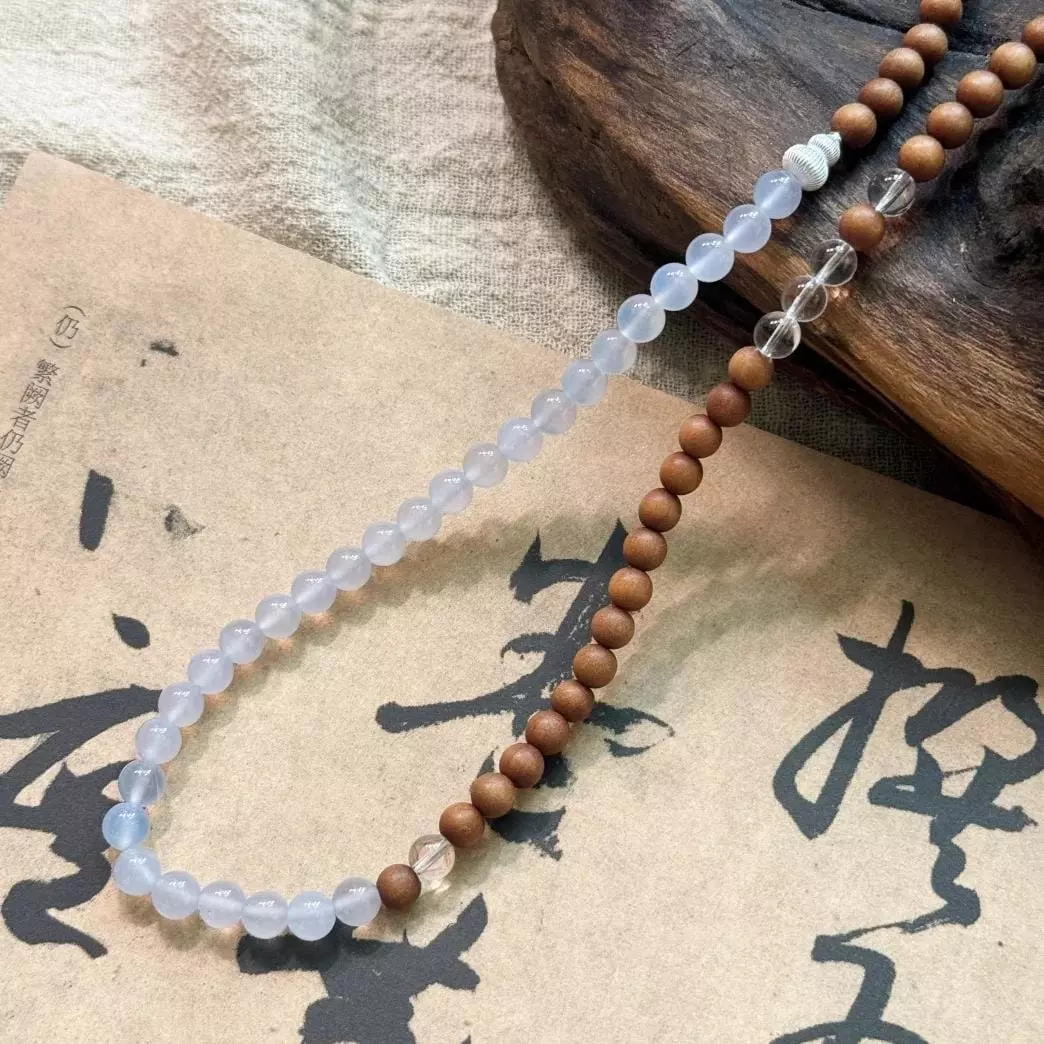
More Than Beads:A Living Practice
In monasteries and quiet homes, the sandalwood mala never leaves the practitioner’s hand.
It’s not jewelry. It’s a sacred tool for awakening.
Each bead counts a mantra. Each breath deepens focus.
The symbolic significance of sandalwood
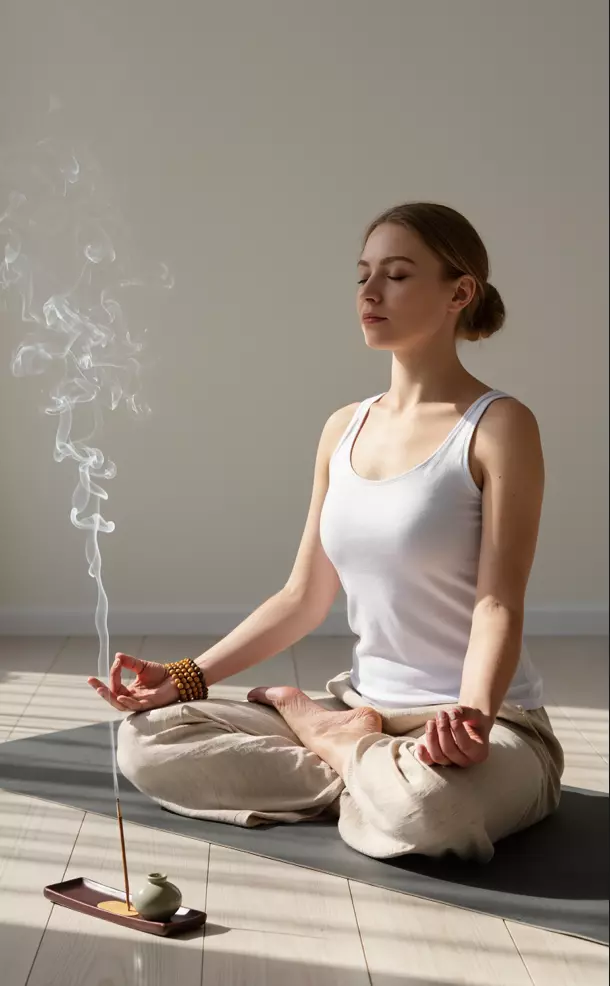
The Buddha praised sandalwood in sutras again and again.
Its scent isn’t just pleasant—it’s spiritual medicine.
- Cooling fire: Pacifies desire, anger, delusion—the “three poisons.”
- Fragrance of virtue: Like good deeds, its aroma lingers long after.
- Sutra companion: Burned during Heart Sutra recitations to carry wisdom on smoke.

How to Use Your Mala:3 Simple Steps
Hold with reverence
- Drape it over your middle finger.
- Keep your index finger still—it represents ego.
- No rush. Just presence.
Recite & move one bead
- Chant your mantra—Om Mani Padme Hum, or any sacred phrase.
- After each full round, pull one bead toward you.
Honor the guru bead
- When you reach the 109th bead (larger, often tassel-tied)—stop.
- Don’t cross it. Turn around. Begin again.
- This small act honors your teacher—and your own inner wisdom.
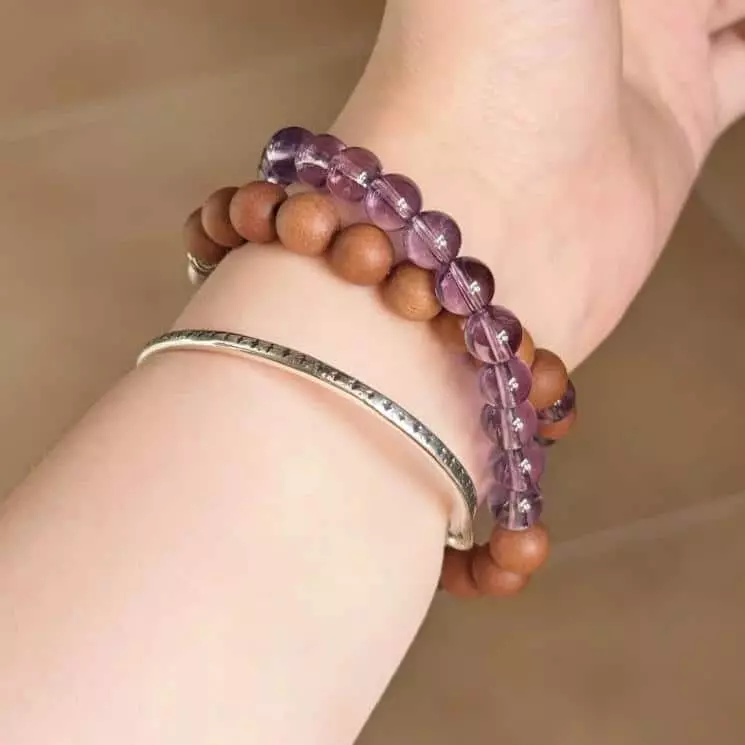
Why 108 Beads? The Hidden Code
108 isn’t random. It’s a map of liberation.
We carry 108 mental defilements.
100 mantras purify them.
The extra 8? For mistakes—or for all beings.
Some say 108 = earthly desires to transcend.
Every circle brings you closer to freedom.
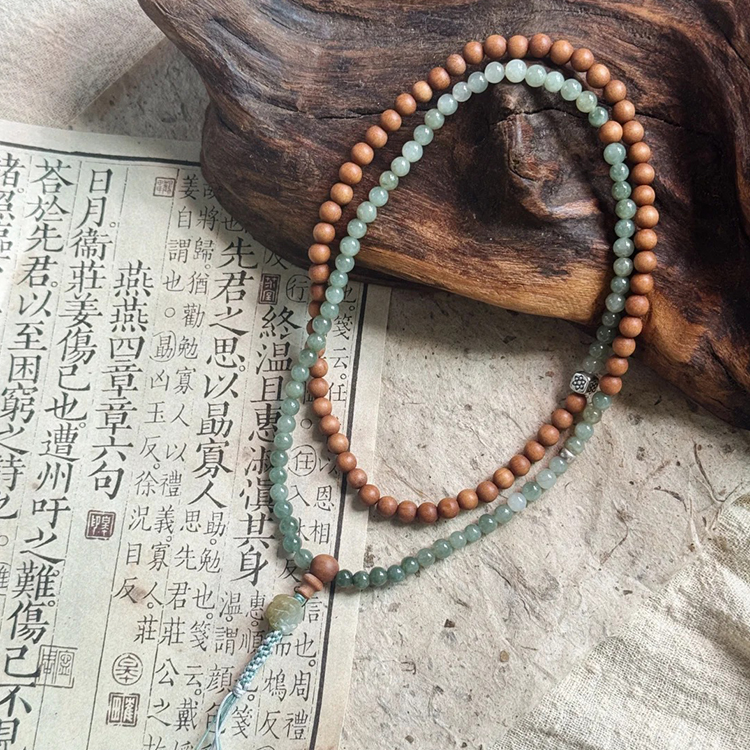
Care for Your Mala:Treat It Like a Vow
Your sandalwood mala is alive. Care for it well.
Store it clean: Keep in a silk or cotton pouch.
Keep it dry: Water warps wood and weakens knots.
Polish gently: Rub with a soft cloth to revive its scent.
Over time, its scent blends with your breath, your prayers, your peace.